
| Trawangan Dive is launching an innovative program aimed at restoring their reefs and welcomes students from around the world to join in. |
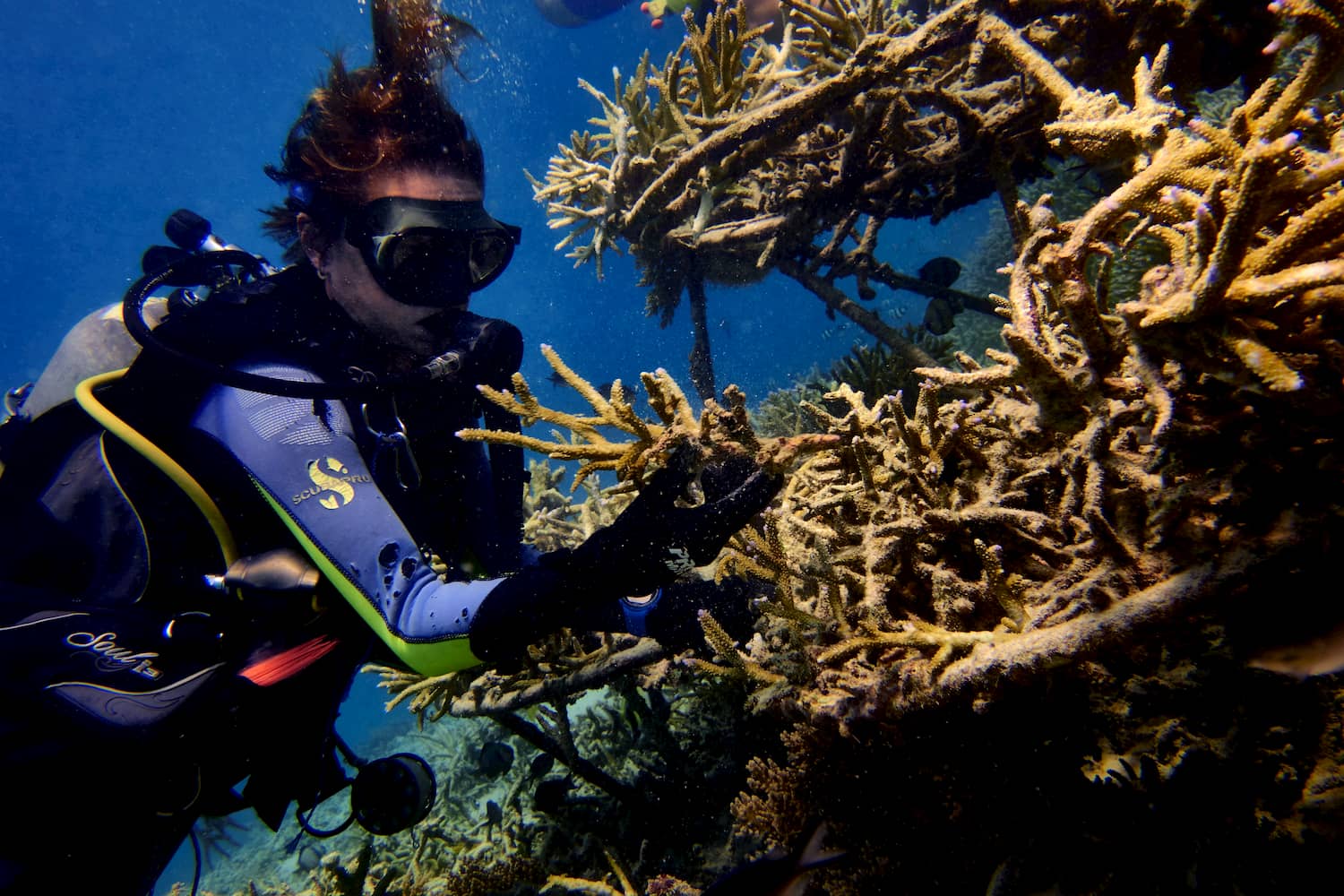
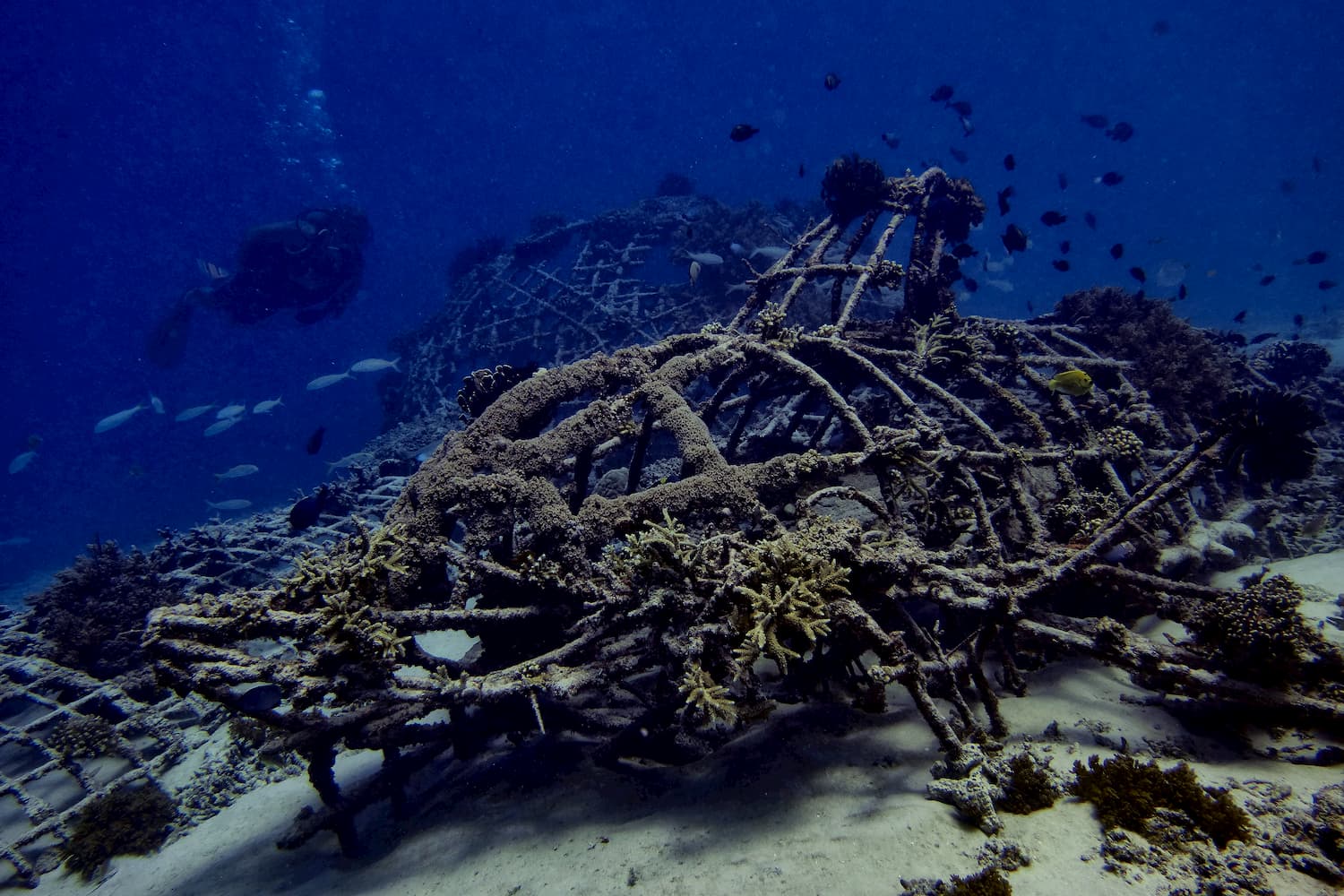
Certain areas of shallow water corals around the Gili Islands have suffered damage by combinations of coral heatstroke, disease, land-based sewage, global sea level rising, over-fishing and direct physical damage. Restoration of degraded reefs and coastal habitats on a scale that makes a difference must be an active environmental priority and not an afterthought. A revolutionary new technology called Biorock® can make this possible. The Biorock® Process involves a submerged steel structure that applies a safe low-voltage electrical current. Small pieces of live broken coral are then strapped to the structure and have been shown to grow at 3-5 times the normal rate while coral survival under higher water temperatures and pollution increased by 16 to 50 times.
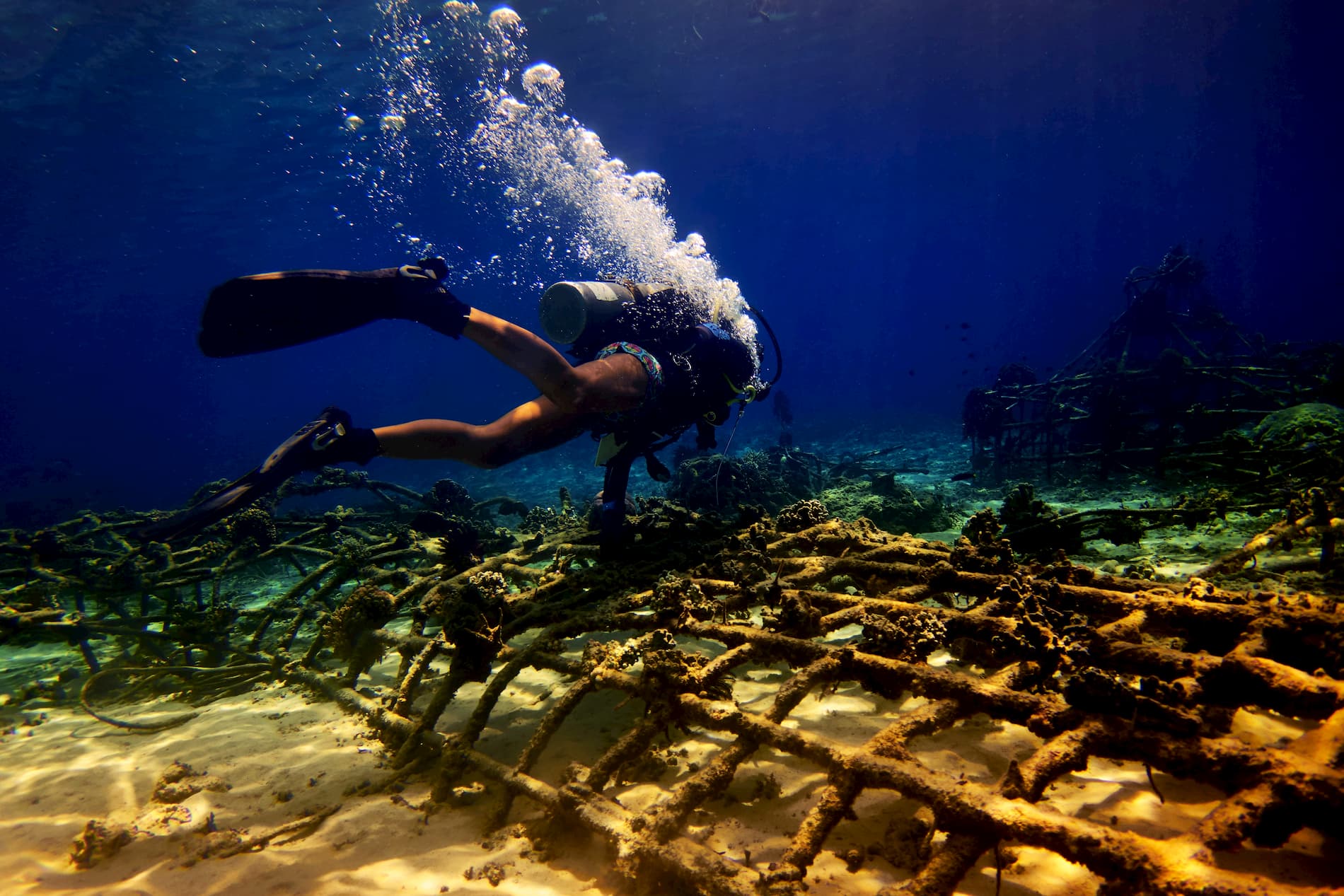
The Gili Islands are the second largest Biorock® site in the world, currently home to 37 Biorock® structures and have hosted International Reef Restoration Training Workshops. The reef restoration project is coordinated by the Gili Eco Trust which works closely with the DKP (Indonesian Marine Conservation and Fisheries). Since 2004 when the first Biorock® reef was installed many development and research students from Indonesian and other Universities around the world have come to study the Biorock® reef restoration project as part of their Thesis or Masters Degree. Our hope is to continue these projects and make the Gili Islands a global centre for coral research and re-growth
Trawangan Dive offers a variety of training programs wherein students and volunteers would receive diver training from Open Water to Divemaster and the Biorock Specialty course. During their training they would learn about coral biology and environmental threats, be trained how to coral garden, survey, conserve, maintain the exciting Biorock® and finally design, weld and submerge their own Biorock® structure.
For more information on Biorock® technology visit www.biorock.net
The following three Programs are offered:
| What’s Included: | 2 Week Program | 6 Week Program | 10 Week Program |
| All dive equipment | √ | √ | √ |
| All PADI materials | √ | √ | √ |
| Open Water Course | √ | √ | |
| Advanced Open Water Course | √ | √ | |
| Emergency First Response Course | √ | √ | |
| Rescue Diver Course | √ | √ | |
| Divemaster Course | √ | ||
| Biorock® Specialty Course | √ | √ | √ |
| Unlimited diving | √ | √ | √ |
| 3 Meals per day | √ | √ | √ |
| Shared (2 person) dorm room accommodation | √ | √ | √ |
| Speed boat transfer to and from Bali | √ | √ | √ |
| Gili Eco Trust donation | √ | √ | √ |
| Materials for Biorock® construction | √ | √ | √ |
| T-shirt | √ | √ | √ |
| Price | $968 USD | $2728 USD | $4307 USD |
| Note - Students must have a minimum certification of Advanced Open Water to enroll in the 2 Week Program Tailor made packages available - Email us with your diving experience level and the time-frame you are planning to travel and we will make a package suited to you. | |||
2 Week Program Description:
Students must have a minimum certification of Advanced Open Water to enroll in the 2 week program. During the 2 weeks students will complete the Biorock® Specialty course as well as gaining further knowledge and experience in reef survey techniques and coral gardening. At the end of this program students will work together to create their own Biorock®
6 week Program Description:
The first 2 weeks are spent completing the dive training courses (Open Water, Advanced Open Water, Emergency First Response, and Rescue Diver). The students will get a chance to enjoy some fun dives between courses in order to enhance their experience level. The second 2 weeks are spent completing the conservation training including the Biorock® Specialty course and at the end of this time students will submerge their Biorock®. The final 2 weeks are spent taking part in 2 practical conservation dives per day, where students will gain experience surveying and gardening the reefs both natural and artificial.
10 week Program Description:
The first 2 weeks are spent completing the dive training courses (Open Water, Advanced Open Water, Emergency First Response, and Rescue Diver). The students will get a chance to enjoy some fun dives between courses in order to enhance their experience level. The second 2 weeks are spent completing the conservation training including the Biorock® Specialty course and at the end of this time students will submerge their Biorock®. We will organize "mini" workshops to provide hands-on training in the practice of Biorock® coral reef and fisheries restoration and shore protection, including theory, design, construction, installation, monitoring, maintenance and repair. The final 6 weeks will be spent completing the Divemaster training and taking part in practical application dives for the conservation efforts. Students will gain experience surveying and gardening the reefs both natural and artificial.
2010 Program Dates:
|
|
|
|
| April 28 – May 12 | April 14 – May 26 | April 14 – June 23 |
| July 14 – July 28 | June 30 – August 11 | June 30 – September 8 |
| September 29 – October 13 | September 15 – October 27 | September 15 – November 24 |
| December 15 – December 29 | December 1 – January 12 | December 1 – February 9 |
Further Program Details:
Students would spend the majority of their stay on conservation efforts from the time their Rescue Diver training is completed. They would be diving 2 times per day 6 days per week with 1 day off. For those in the 10 weeks Divemaster program, once the Rescue Diver trainng is complete, the students spend half their day with Divemaster studies and the other half on conservation efforts. In addition to this the students will have lectures followed by a practical application dives (when applicable) on the following topics:
- Coral ecology
- Species identification
- Reef threats (bacterial algaes, sponges, Crown of thorns, Drupella snails etc.)
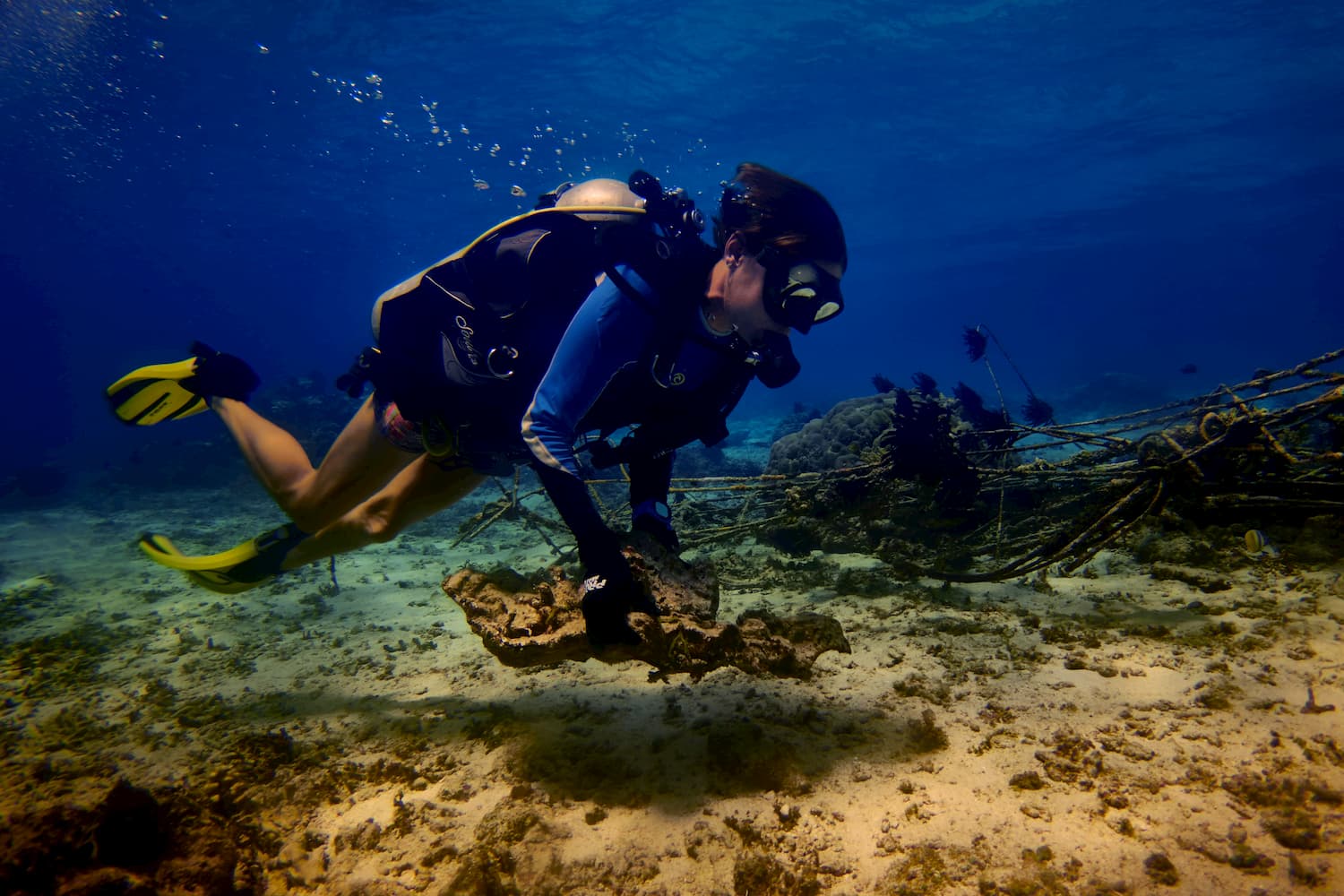
- Coral gardening which includes removal of obvious threats, overturning broken corals, coral collection to be tied on Biorock® structures, cementing of shifting rumble, cleaning algae off the reefs, etc. Please note that many of the dives will be concentrated on this topic and the students will regularly dive different areas helping to improve the condition of the reef both natural and artificial with the use of continued coral gardening.
- Coral survey techniques and the submission of data to PADI's Coral Watch is the other large portion of dives. Using the grid method of collecting data, students will learn how to identify and measure naturally growing corals and compare the data to that of the Biorock® artificial reefs.
Details regarding Transfers and Visas:Students would be required to book their own flights into Denpasar Bali. They will be picked up from the airport and taken to their hotel. The cost of the accommodation in Bali is the students responsibility and we will work with them to book the room they would like based of their budget preference as well as length of stay. Students will be picked up from their hotel the morning of their departure to the Gili Islands and taken via fast boat directly to Gili Trawangan where they will be met in the harbor and brought to Trawanagan Dive.
Visa's for those staying in Indonesia for longer than 30 days must be obtained BEFORE they enter the country. We will work with the students to arrange the necessary visa's before they arrive.